I would love to show screenshots of the dashboard and monitoring system, but I am waiting on access to these from Animalia. I will add visuals as soon as I have them.
Real-Time Slaughterhouse Monitoring
Real-time anomaly detection system monitoring meat-quality metrics across multiple Nortura and Fatland slaughterhouses — used daily by Animalia classification advisors to flag instrument errors and process deviations before they affect large batches.
At Norwegian slaughterhouses, pigs are classified based on estimated meat percentage. This classification directly affects the value of each animal and is used to determine payments throughout the value chain.
Meat percentage is estimated using specialized classification systems such as GP7 and AutoFOM, operated by trained classifiers. While these systems are highly accurate, deviations can occasionally occur due to instrument calibration issues, human error, or changes in production conditions.
Because thousands of pigs can be processed within a few days, even small systematic errors may have significant financial consequences for both farmers and slaughterhouses. Detecting such deviations quickly is therefore critical.
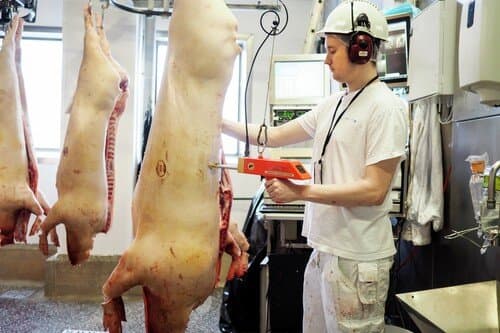
A GP7 instrument used on a carcass to measure meat percentage for classifying the animal. (Photo: Caroline Roka / Animalia)
The Challenge
Not every deviation indicates a problem. Changes in meat percentage can also occur naturally due to factors such as:
- Seasonal feeding strategies
- Differences in pig genetics and breeding lines
- Variations in slaughter weight and age
- Changes in supplier composition
The challenge was therefore not only to detect unusual changes, but also to provide tools that help explain why they occur.
Solution
I developed a monitoring platform that automatically collects classification data from slaughterhouses across Norway and analyzes incoming measurements on a daily basis. The system compares recent observations against historical population data and applies statistical process monitoring techniques to identify abnormal changes in meat percentage.
The platform provides:
- Real-time monitoring of slaughterhouse performance
- Statistical deviation detection using z-scores
- Trend analysis over time
- Automatic alerts for unusually high or low meat percentages
- Interactive dashboards for detailed investigation
Explainable Analytics
To support root-cause analysis, I also developed a machine learning module that investigates which factors influence meat percentage. Using decision tree models and feature importance analysis, the system helps identify variables that may explain observed changes, such as supplier composition, weight distribution, classification patterns, or seasonal effects. While the model was not designed for highly accurate prediction, it provides valuable insights into which variables contribute most to observed deviations.
Impact
Used daily by Animalia's classification advisors to monitor Nortura and Fatland slaughterhouses. Early anomaly detection has helped identify instrument calibration errors and classification deviations before they affect large numbers of animals — where thousands of pigs can be processed within days, even a small systematic error carries significant financial consequences.